
Table of Contents
- Why Custom Tumblers Chip: What Actually Causes the Damage
- Finish Types Compared: Sublimation, Epoxy, Painted, and Powder Coating
- Are Sublimation Tumblers Durable? A Closer Look at Wear Over Time
- Are Custom Tumblers Dishwasher Safe? What Heat and Steam Do to a Finish
- How to Care for Custom Tumblers So the Design Lasts
- When to Replace a Tumbler: Signs the Damage Is Beyond Repair
- How Long Should a Custom Tumbler Last? Realistic Timelines
- Conclusion: Choosing a Tumbler That Goes the Distance
- Frequently Asked Questions
Last Updated: October 12, 2026
Why Custom Tumblers Chip: What Actually Causes the Damage
Do custom tumblers chip over time? Yes, they can, but the damage is rarely random. Most chipping comes down to three forces: impact, heat, and moisture.
At Lynne's Creations, we hear this question from nearly every gift-giver before they order. It's a fair worry.
The coating on a decorated tumbler is a thin layer bonded to stainless steel. That bond is strong, but it isn't indestructible.
Impact, heat, and moisture: the three main culprits
- Impact: A drop on concrete or a tumble in a bag can crack the finish at the edges.
- Heat: Hot water and steam soften the bond between coating and metal.
- Moisture: Water seeps into a small crack and lifts the design from underneath.
A common mistake is blaming the maker when a tumbler chips. In practice, the culprit is usually how it was washed or carried.
Finish Types Compared: Sublimation, Epoxy, Painted, and Powder Coating
Each finish wears differently, and that difference decides how long your design survives. Here's how the four main types stack up.
| Finish | How It's Applied | Chip Risk | Best For |
|---|---|---|---|
| Sublimation | Heat-fused into coating | Low | Everyday drinkware |
| Epoxy | Resin layer over design | Low to medium | Glossy, raised designs |
| Painted | Acrylic paint by hand | Medium to high | One-of-a-kind art |
| Powder coating | Electrostatic powder, baked | Low | Base color and grip |
Which finish holds up best against chipping?
Sublimation and powder coating resist chipping best because the color sits inside or under a protective layer, not on top of it.
That's the trade-off most guides skip. Hand-painted tumblers look stunning, but they ask for gentler handling.
Epoxy tumblers fall in the middle. The resin layer adds depth and shine, yet it can still crack if dropped on a hard edge.
Are Sublimation Tumblers Durable? A Closer Look at Wear Over Time
Sublimation tumblers are among the most durable decorated options available, but "durable" is not the same as "indestructible." The design is fused into a polymer coating under high heat, so there is no raised layer to peel away the way a sticker or a decal would.
A sublimation tumbler is a stainless steel cup whose artwork is converted into gas and bonded into a polymer coating at roughly 350-400°F.
What actually wears out on a sublimation tumbler
Wear still happens, just slowly and in predictable ways:
- Fading from UV and repeated heat cycles. Direct sun exposure and repeated hot-water cycles gradually dull the dye. This is a color shift, not a chip.
- Fine scratches from abrasive sponges. Steel wool, scouring pads, and gritty cleansers leave micro-scratches that scatter light and make the gloss look cloudy.
- Edge wear at the rim and base. These are the two highest-contact zones. A drop on concrete can chip the coating at the rim even on a sublimation tumbler, because the coating is thin there.
The steel body itself holds up well. Vacuum insulation keeps drinks cold for hours, and the outer wall rarely dents from normal use. When a sublimation tumbler fails, it is almost always the coating at an impact point, not the design fading off.
How sublimation compares to epoxy and paint over time
This is where most guides stay vague, so here is the honest comparison:
- Sublimation: Lowest chip risk. The design cannot peel because it is not a layer. Failure mode is fading and edge chipping at impact points.
- Epoxy: Low-to-medium chip risk. The resin layer is thick and glossy, but it can crack on a hard drop and, once cracked, moisture can creep under the edge and cloud the resin.
- Painted (acrylic by hand): Medium-to-high chip risk. The paint sits on the surface, so it scratches and peels first. A painted tumbler needs the gentlest handling of the three.
The one sublimation failure people misdiagnose
A common complaint is that a sublimation design "faded" after a few months. In most cases the coating did not fail, the owner used a scouring pad or ran the tumbler through a heated dishwasher dry cycle. Both damage the topcoat, not the fused design. Switching to a soft sponge and air drying usually stops the decline immediately.
Are Custom Tumblers Dishwasher Safe? What Heat and Steam Do to a Finish
Most decorated tumblers are not truly dishwasher safe, even when a label says otherwise. Heat and steam are the enemies here, not water alone.
Dishwasher cycles reach high temperatures. That heat softens the coating, and the steam works into any tiny edge lift.
So what actually happens inside the machine?
- Hot water expands the metal slightly
- Steam loosens the coating's grip
- Detergent strips the protective seal
If you must use a dishwasher, place the tumbler on the top rack and skip the heated dry. Hand washing remains the safer path.
How to Care for Custom Tumblers So the Design Lasts
Hand washing is the single best habit for protecting a custom tumbler. It takes under a minute and adds years to the finish.
Highland Cow 20 oz Stainless Steel Skinny Tumbler →
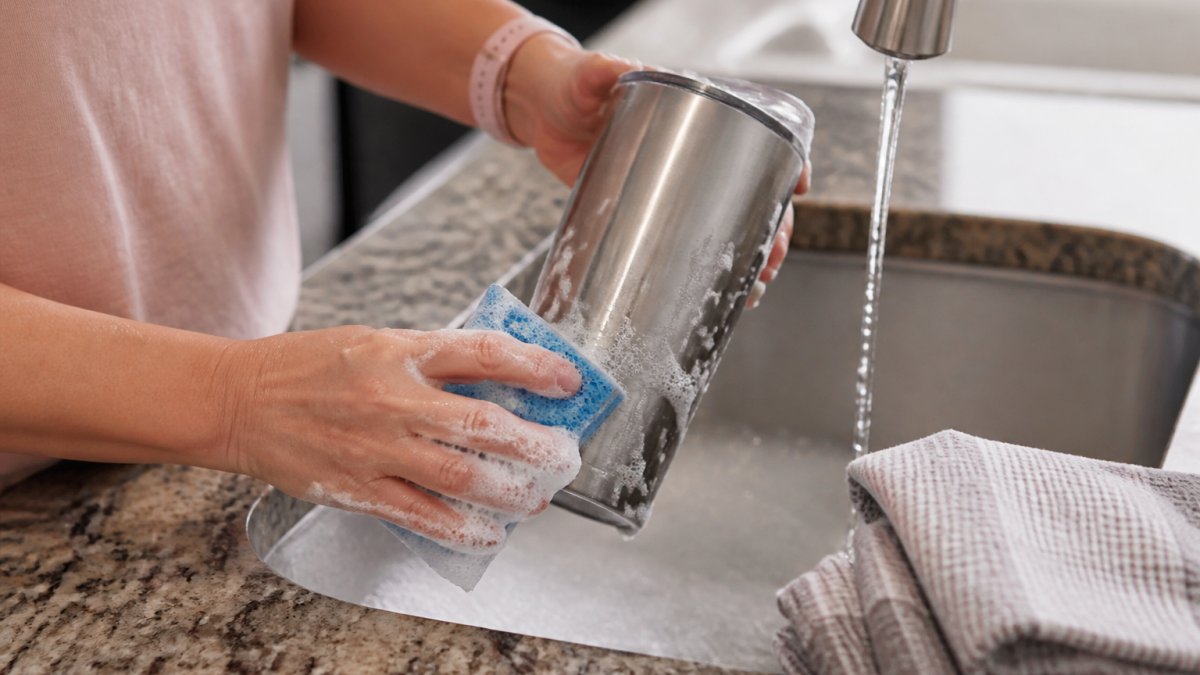
Hand-washing steps that protect the coating
- Fill the sink with lukewarm water and a drop of mild soap.
- Wipe the inside and outside with a soft sponge.
- Avoid abrasive pads and scrub brushes on the design.
- Rinse with cool water, never hot.
- Dry with a soft towel and let it air completely.
A few more habits keep the surface intact:
- Store tumblers upright so designs don't rub together
- Keep them out of a hot car for long stretches
- Use a sleeve or carrier in a crowded bag
Dry the lid and straw separately. Trapped moisture under the lid gasket is a common cause of odor and coating lift near the rim.
When to Replace a Tumbler: Signs the Damage Is Beyond Repair
Some damage is cosmetic, and some means it's time to replace. Knowing the difference saves you from tossing a tumbler too early, or using one you shouldn't.
Replace your tumbler when:
- The coating peels into the drinking area
- Rust spots appear on the steel
- The vacuum seal fails and drinks no longer stay cold
Small chips on the lower body are usually harmless. Damage near the rim or inside the cup is a different story.
How Long Should a Custom Tumbler Last? Realistic Timelines
A well-cared-for custom tumbler can last several years of daily use, and the steel body often outlasts the design by a wide margin. But "several years" is not a useful answer on its own. The honest answer depends on three variables: the finish type, how you wash it, and how often it gets dropped.
Here is a realistic, finish-by-finish picture based on common patterns reported by decorators and long-term owners:
| Finish | Hand-washed, gentle use | Dishwasher use | Frequent drops |
|---|---|---|---|
| Sublimation | 4-8+ years, mostly fading | 1-3 years, edge lift and fading | Chips at rim within months |
| Epoxy | 3-6 years, gloss dulls | 1-2 years, resin clouds or cracks | Cracks at impact points |
| Painted (acrylic) | 1-3 years, scratches and peels | Under a year, rapid peeling | Peels at edges quickly |
| Powder-coated base | 5+ years for the color | 2-4 years | Dents more than chips |
These are ranges, not guarantees. The same cup can land at the low or high end depending entirely on care.
The three variables that move the timeline most
- Washing method. Hand washing with lukewarm water and mild soap is the single biggest factor. A heated dishwasher dry cycle can undo months of careful use in one run.
- Impact frequency. A tumbler that lives in a bag with keys and a phone will chip at the rim far sooner than one that sits on a desk. A sleeve or carrier changes the math.
- Heat exposure. Leaving a tumbler in a hot car or filling it with boiling water repeatedly softens the coating-to-metal bond over time, even without a dishwasher.
A simple decision guide: repair, retire, or replace
When damage appears, use this framework instead of guessing:
- Cosmetic chip on the lower body, coating intact elsewhere: Keep using it. This is normal wear and does not affect safety.
- Chip or peel at the rim, outside the drinking path: Monitor it. If the edge lifts further or moisture gets under it, retire the tumbler.
- Coating flaking inside the cup or into the drinking area: Stop using it for drinks. Loose coating material should not be swallowed, and exposed steel or adhesive is not a food-safe drinking surface.
Repairing a chipped custom tumbler is rarely worth it. Touch-up paint and epoxy patches tend to fail at the same edge, and a patch near the rim can create a new food-contact concern. For anything inside the drinking area, replacement is the safer and usually cheaper call.
How to stretch a tumbler toward the high end of its range
The habits that add years are simple: hand wash with a soft sponge, air dry or towel dry completely, store upright so designs do not rub, keep it out of a hot car, and use a sleeve in a crowded bag. Owners who follow those five habits routinely report their sublimation and epoxy tumblers outlasting the design on cheaper painted cups by two to three times.
At Lynne's Creations, our stainless steel tumblers are built for everyday use. Each one includes a lid and straw, and our stainless steel care guidance from the Specialty Food Association notes that gentle washing protects both finish and flavor. You can browse our Highland Cow 20 oz Stainless Steel Skinny Tumbler or our Bee Kind 20 oz Stainless Steel Skinny Tumbler to see how the designs hold up in person.
Conclusion: Choosing a Tumbler That Goes the Distance
Chipping isn't inevitable. It's the result of heat, impact, and moisture meeting a finish that wasn't cared for.
When you buy from a maker who understands finishes, you start with better odds. Lynne's Creations offers handcrafted tumblers with artistic designs, custom order options, and gift-ready pieces made to last with proper care.
Choose a tumbler built with care, wash it by hand, and it will keep your drinks cold and your design bright for years.
Frequently Asked Questions
Do custom tumblers chip over time?
Yes, custom tumblers can chip, but how soon depends on the finish and how you treat it. Sublimation designs bond into a powder coating and typically resist chipping better than painted or epoxy-coated surfaces. The most common causes are drops, abrasive scrubbing, and repeated dishwasher cycles. A well-made stainless steel tumbler that is hand-washed and handled carefully can keep its design intact for years.
Are custom tumblers dishwasher safe?
Many custom tumblers are labeled dishwasher safe, including the stainless steel skinny tumblers at Lynne's Creations. Even so, repeated dishwasher cycles expose the finish to high heat, steam, and harsh detergent, which can slowly break down a coating over time. If you want the design to look new for as long as possible, hand-washing with mild soap and a soft sponge is the safer routine.
How do I prevent my custom tumbler from chipping?
Hand-wash with warm water and mild dish soap instead of putting it in the dishwasher. Skip abrasive sponges and scrubbers, which scratch the coating and create weak spots. Avoid dropping the tumbler or tossing it loose into a bag with keys or metal objects. A silicone boot on the base adds cushioning against hard surfaces. These habits keep the finish sealed and dramatically reduce the chance of chips.
When should I replace a tumbler with a damaged coating?
Replace your tumbler when the coating has chipped down to bare metal, when peeling pieces could come loose near the rim or straw opening, or when the damage is large enough that flakes could end up in your drink. Small cosmetic chips on the lower body are usually safe to keep using. Any damage around the lip, lid, or interior should prompt a replacement.